Technical Divergences – Finland vs. The World

Why are Finnish technical standards so unique? We compare global norms against Finnish national decrees, covering everything from U-values and DryChain10 moisture protocols to the now-mandatory Climate Reports for 2026.
The Anatomy of Divergence: Codes & Standards
While many countries rely on general international standards, Finland’s technical requirements are dictated by specific Ministry of the Environment Decrees. The core difference lies in how “performance” is measured:
- Thermal Envelope (Decree 1010/2017): While the EU promotes energy efficiency, Finland mandates it through a strict E-value (overall energy consumption). This often requires a “Total Efficiency” approach where insulation, heat recovery, and airtightness must work in a calculated synergy that global templates rarely achieve.
- Structural Safety (Eurocodes & National Annexes): You cannot use the standard Eurocode values here. The Finnish National Annex (NA) accounts for specific “Isostatic” conditions and varying snow load zones. For example, a roof designed for Central Europe will likely fail the Finnish NA for structural stability during a heavy Nordic winter.
- Acoustics & Indoor Air (Decree 796/2017): Finland has some of the world’s strictest decibel limits for sound insulation between apartments and airborne noise from technical systems, requiring specific wall compositions (e.g., heavy concrete or double-frame timber) that are not standard elsewhere.

Deep Dive: Moisture Control (The “Kuivaketju10” Principle)
Finland utilizes a system called Kuivaketju10 (Dry Chain 10). It is a verified process to ensure moisture doesn’t enter the building during construction.
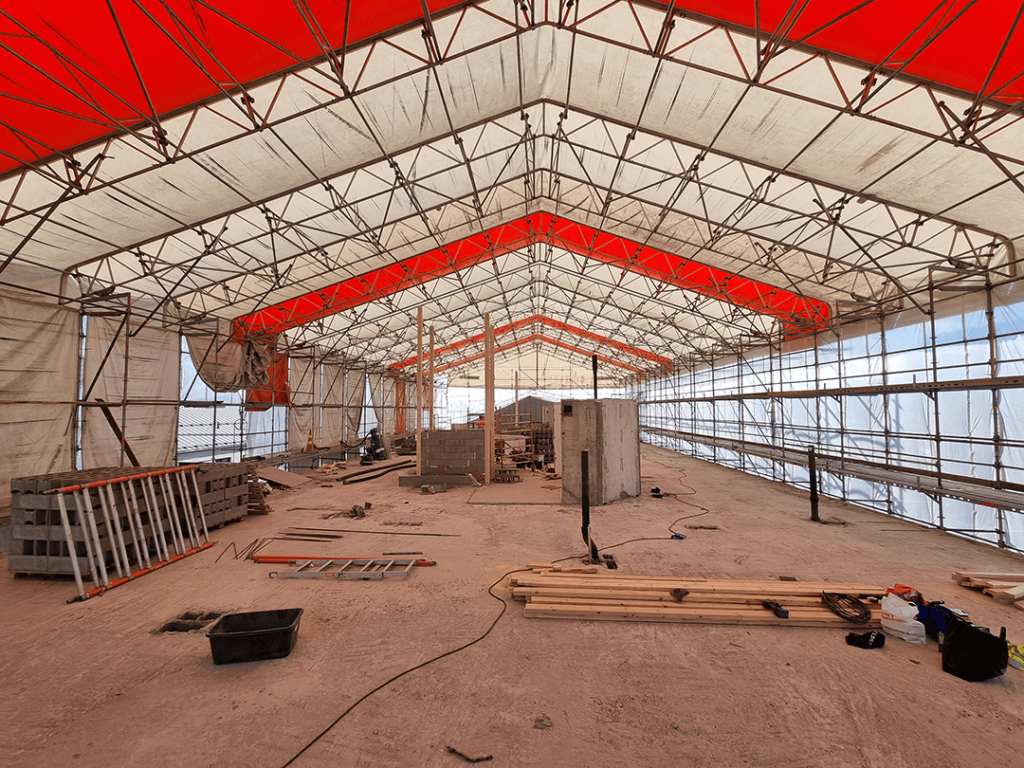
- The Issue: In many countries, it’s okay to let concrete get wet during a storm. In Finland, high-value projects often require full-weather protection tents over the entire construction site.
- Localization Impact: Your project schedule must account for these tents and the drying times for concrete, which are strictly monitored by local authorities.
Conclusion Localization is not just a “translation of units.” It is the adaptation of a building to a legal and physical environment that values longevity and energy efficiency above all else.
Optimize your budget through early localization.
The most expensive changes are the ones made during construction. By aligning your technical specifications with Finnish Decrees during the design phase, you save time, reduce material waste, and ensure a smooth handover.
Get a Technical Localization Audit for your project – Request a QuoteRead more
Civil Defense Shelters in Finland – The “Building Within a Building”
Many international developers have heard that Finland requires “bunkers,” but few realize the technical complexity involved. A Finnish Civil Defense Shelter (VSS) is not just a room; it is a specialized, blast-hardened facility with its own independent life-support systems. Here is what is actually required under the Rescue Act (379/2011).
Civil Defense Shelters in Finland – The “Building Within a Building”The Localization Checklist – Navigating the 2026 Regulatory Environment
Navigating Finnish construction laws requires a clear roadmap. From mandatory civil defense shelters to new BIM data requirements, this checklist ensures your international project meets every legal milestone under the Rescue Act and the new Building Act.
The Localization Checklist – Navigating the 2026 Regulatory EnvironmentBIM and the New Finnish Building Act: Protect Your Confidentiality in Digital Permitting
The upcoming mandatory BIM-based permitting under the Finnish Building Act (751/2023) introduces a new era of digital transparency. However, it also creates a complex intersection between the obligation to provide machine-readable data and the protection of private trade secrets. In this blog, we examine the technical and legal requirements of this transition and the importance of localized data management in preserving intellectual property.
BIM and the New Finnish Building Act: Protect Your Confidentiality in Digital Permitting